
What is a Spa?
and what is it for
The term spa is used today with two distinct meanings, which should be differentiated from the beginning to avoid confusion.
On the one hand, spa as a hot tub: a domestic or professional device designed for bathing in hot water, equipped with water and air jets, filtration, heating, and control systems. This is the type of spa this guide refers to and the most common in homes, terraces, and gardens.
On the other hand, spa as a place of relaxation or thermal center: an establishment dedicated to wellness, which may include thermal pools, water circuits, massages, and treatments. In this case, the spa is not a device, but a space or service.
The origin of the term is traditionally associated with the Latin expression salus per aquam (“health through water”) and, historically, with the city of Spa (Belgium), known since Roman times for its thermal waters and for giving its name to this type of wellness facility.
Throughout this article, when we talk about spa, we will refer exclusively to the hot tub, explaining what it is, how it works, and how it differs from other solutions such as pools or swim spas.
What is a Spa?
Definition of spa in the domestic sphere
A spa, in the domestic sphere, is a hot tub designed for bathing in hot water, equipped with systems that propel water and air under pressure for purposes of comfort and well-being. Unlike a conventional bathtub, a spa keeps the water at a constant temperature and filters it continuously.
Residential and collective use
There are different types of spas. In addition to residential use, spas are also used in hotels, thermal centers, gyms, and other shared-use facilities. In these environments, shared usage entails higher technical and sanitary requirements, so public-use spas are typically subject to specific regulations regarding design, water control, safety, and hygiene.
Location and design
The spa is designed for repeated and prolonged use, both indoors and outdoors, and can be installed in gardens, terraces, porches, or enclosed spaces. Its design incorporates ergonomic seats and different massage positions, adapted to the user’s body.
Autonomous system
From a technical point of view, a spa is an autonomous system: it integrates its own hydraulic circuit, pumps, heater, filters, and a control system that allows the water to be maintained in suitable conditions without having to empty it after each use.
What a spa is not
Although often confused with a small pool, a spa is not intended for swimming or physical activity, but for relaxation in hot water. Nor is it a merely decorative element, since its operation and consumption depend directly on its technical components and the use that is made of it.
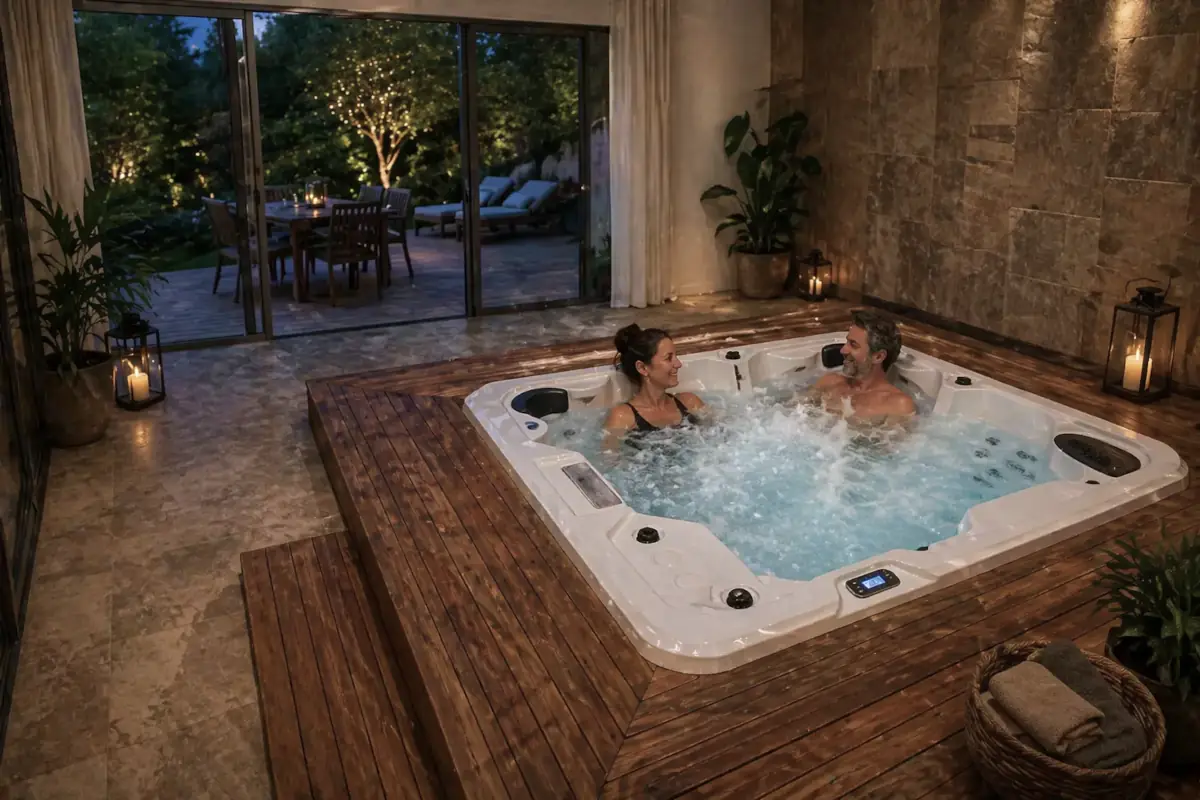
Private, inground, indoor spa
An inground spa in the house have an especially appealing aesthetic and can be used throughtout the year
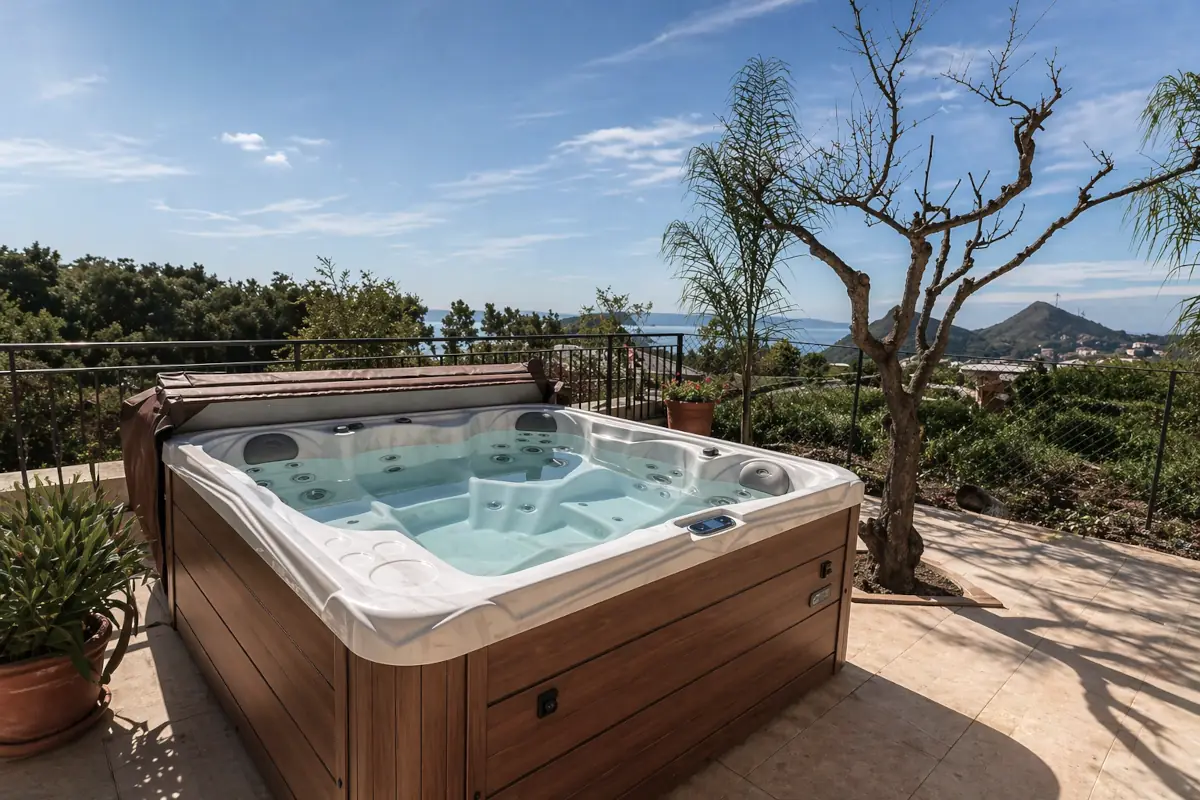
Portable outdoor spa
Portable outdoor spas are easy to install and provide relaxation and well-being. Enjoy hydrotherapy at home all year round with low maintenance and energy efficiency.
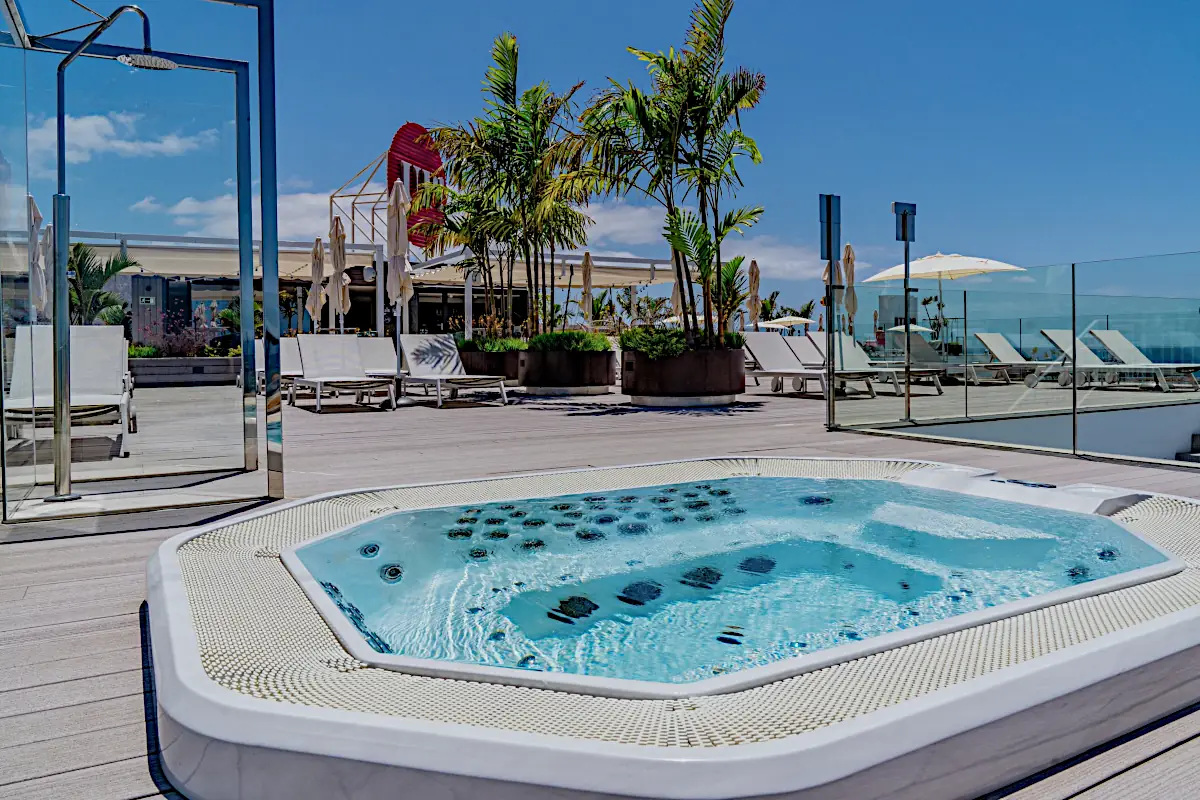
Shared-use spa
Hotels, spa centres, and other shared-use facilities require spas with a perimeter overflow system.
How does a spa work?
How a spa works is better understood if it is considered as a hot water recirculation system designed to combine hydromassage, thermal control, and continuous water treatment.
Suction and hydromassage circuit
The water from the spa is drawn from the vessel through skimmers or lower intakes. In many models, part of this flow is directed directly to the hydromassage circuit, where one or more pumps propel the water towards the jets without first passing through the filters. This configuration allows maintaining the flow and pressure necessary for the massage to be effective, since the filtration elements can generate pressure drops.
Filtration and heating circuit
In parallel, the spa has an independent filtration circuit, usually with a lower flow rate, which circulates the water through the filters and the heating system. This circuit is responsible for removing particles, keeping the water clean, and maintaining the selected temperature stable, both during use and in periods when the spa is not being used.
Air blower and bubble massage
In addition to water hydromassage, some spas incorporate an air blower. This device introduces pressurized air through injectors located at the bottom or on the walls of the vessel, generating a bubble massage. Unlike hydromassage by jets, this system produces a more uniform and enveloping effect, focused on superficial stimulation rather than localized pressure.
Jets and massage regulation
The characteristic effect of the spa occurs in the hydromassage jets, where the propelled water mixes with air. The intensity and types of massage depend on the design of the jets, the power of the pumps, and the possibility of regulating the flow or air intake at each point.
Filtration and disinfection cycles
When the spa is not in use, the system enters automatic filtration cycles. During these cycles, the water is recirculated, filtered, heated if necessary, and maintained in adequate hygienic conditions, without the need to empty the vessel after each bath. For this reason, the use of a disinfection system is essential.
Control unit
The entire assembly is controlled by an electronic unit from which parameters such as temperature, filtration times, activation of hydromassage pumps, or lighting are adjusted. Overall, the operation of a spa is based on keeping the water clean, hot, and in constant circulation to offer a comfortable and repeatable user experience.
Main components of a spa
Main components of a spa can be grouped into several systems that work together to ensure the comfort, safety, and proper functioning of the equipment.
Vessel and insulation
The central element is the spa vessel, usually made of reinforced acrylic. Seats, headrests, and different massage areas are integrated into it. Under the vessel there is a thermal insulation system whose function is to reduce heat loss and, with it, energy consumption.
Pumps
The pumps are responsible for moving the water. In most spas there is at least one pump dedicated to hydromassage and another for filtration, although in more complex models there may be several pumps for different groups of jets. Its power directly influences the intensity of the massage and the water recirculation capacity.
Hydromassage jets
The hydromassage jets are the points through which the water, and in many cases the air, enters the vessel again. There are different types according to their size, orientation, and function, and they are usually designed to act on specific areas of the body. In some models they allow regulating the flow or partially closing the passage of water.
Filtration system
The filtration system is responsible for retaining particles and impurities from the water. It usually uses cartridge filters, which must be cleaned or replaced periodically to maintain water quality and avoid overloading the pumps.
Heating system
The heater is the component that raises and maintains the water temperature. It is normally electric and works in coordination with the filtration circuit to ensure a homogeneous distribution of heat throughout the vessel.
Control system
The entire assembly is managed by an electronic control system, from which the user adjusts the temperature, activates the hydromassage pumps, programs the filtration cycles, and controls additional functions such as lighting. This system acts as the brain of the spa, coordinating all the components so that they work in a balanced way.
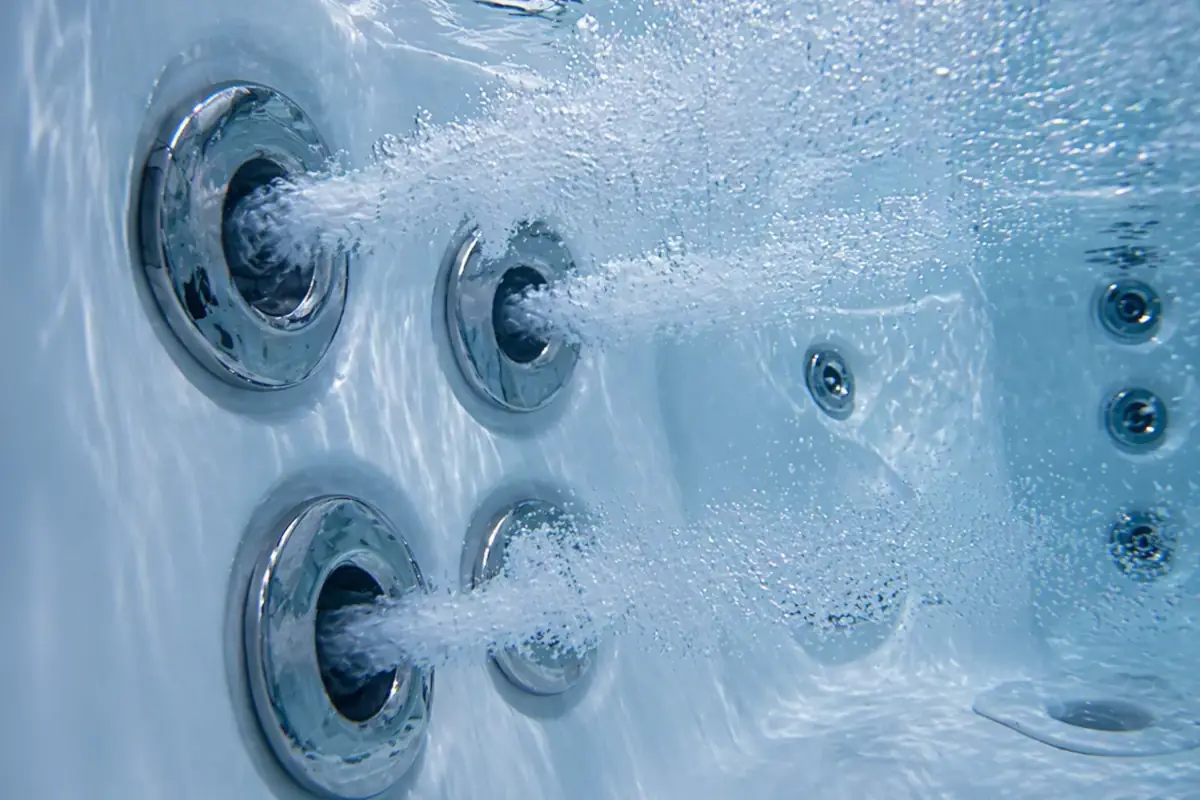
Relaxing and rejuvenating massage
Underwater hydrotherapy jets provide uniform, soothing pressure. An efficient system designed to improve circulation and maximize spa comfort.
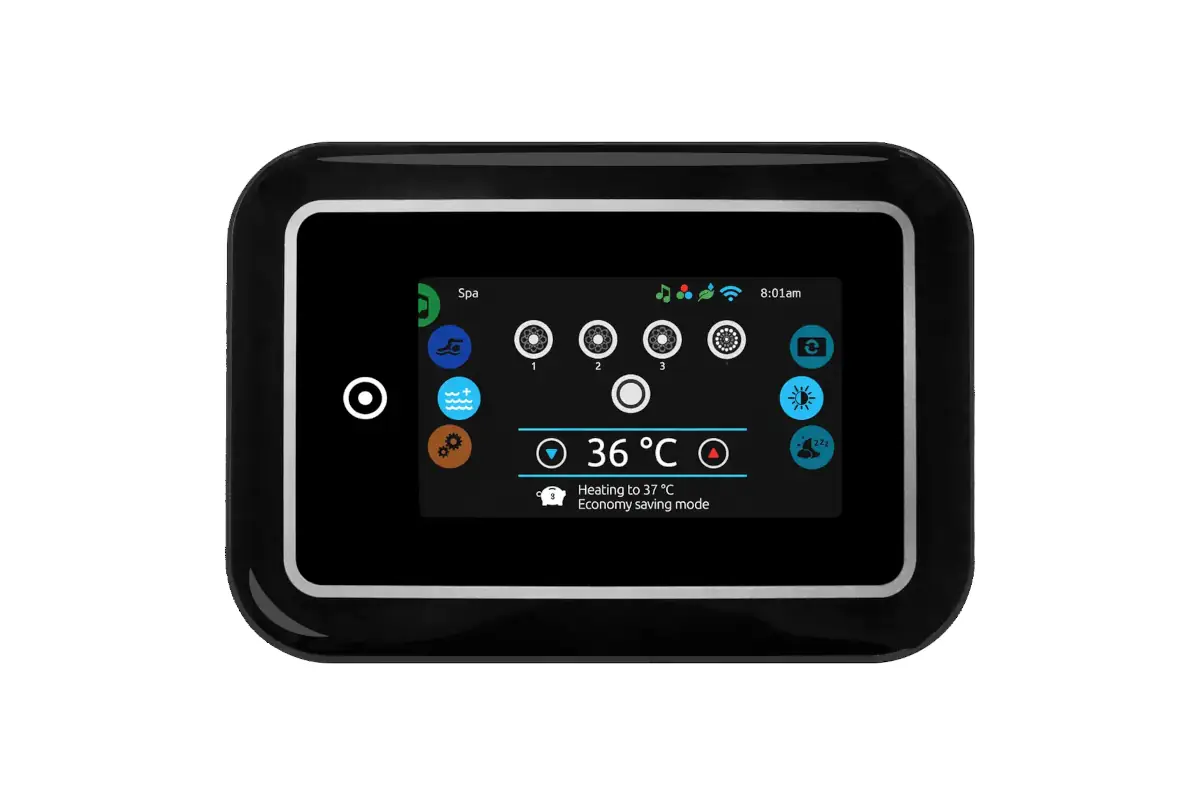
Spa control panel
Intuitive spa control panel with precise temperature and hydrotherapy settings. A modern digital interface that enhances energy efficiency and the overall user experience.
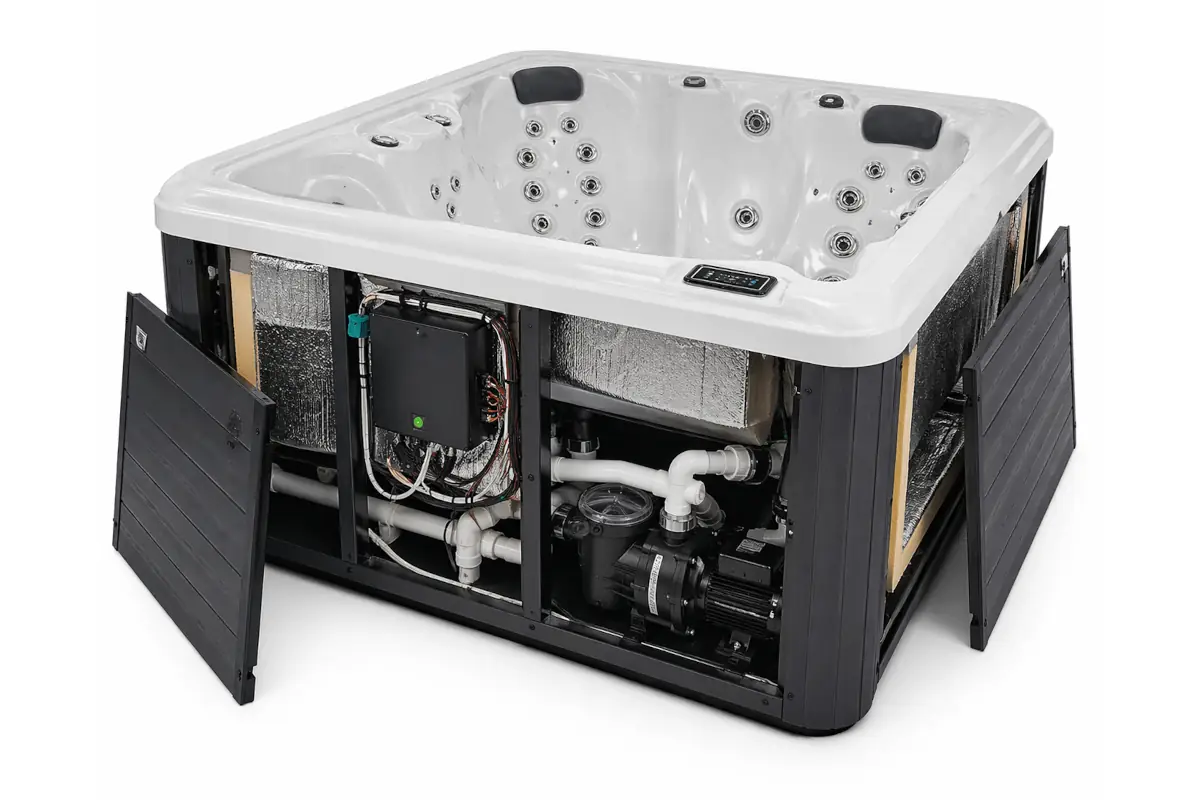
All-in-one
Portable spa with open panels showing its interior. All equipment: pump, control box, etc. is easily accessible. An efficient design that simplifies maintenance and ensures reliable hydrotherapy system performance.
Difference between spa and jacuzzi.
The difference between spa and jacuzzi is that spa is a generic term that designates a hot tub, while Jacuzzi is originally a trademark that, due to popular use, is often used to refer to any spa.
What is a spa used for
A spa is mainly used for relaxation and well-being in hot water, taking advantage of hydromassage as an element of comfort. In addition, it has a clear recreational and social use, as it is common to share it with family or friends, and it is part of the daily domestic use as a space designed to disconnect, slow down, and enjoy time calmly.
What a spa is NOT
A spa is not a pool nor is it designed for swimming or physical activity; its volume, temperature, and configuration respond to relaxation in hot water. Nor is it a merely decorative element: it requires filtration, heating, and water treatment to function correctly. In other words, a spa is not simply “turned on and that’s it”; it is a technical device designed to be used often… and to be enjoyed without haste.
When does it make sense to consider a spa
It makes sense to consider a spa when looking for a wellness solution that does not require major works or the space of a pool, and when the main use is relaxation rather than physical activity. It also fits well in homes where frequent use is valued, even throughout the year, and where the spa can be integrated into the daily routine as a small accessible luxury, closer to a habit than something exceptional.