
Types of Spas
use and features
A spa is a hot-water hydromassage installation that operates with recirculation, filtration, and sanitary control. From a technical standpoint, spas are mainly divided into residential (domestic) and commercial (public-use) spas, and this distinction affects design, equipment, and hygiene requirements. Both types can be inground or above ground/portable and can be installed indoors or outdoors. In contrast, hydromassage bathtubs (with water changed after each use) are considered a different solution and are primarily intended for indoor use.
Our spa guides section contains all the information you need to understand the different aspects of this type of installation.
Spas for domestic use
A domestic spa is designed for homes and private use, with a low bather load and operating cycles adapted to that use. It typically uses continuous recirculation and filtration, and its design prioritizes comfort, energy efficiency, and simpler installation than in collective environments. Even so, it is still important to properly size the filtration, heating, and water treatment to maintain sanitary quality with reasonable maintenance.
In-ground or above-ground
A domestic spa can be in-ground (integrated into a structure) or above-ground (installed on the ground with its own structure). The embedded type usually offers a more integrated and comfortable access, but requires providing a technical access panel and ventilation for the equipment. The surface-mounted type is quicker to install and facilitates access to pumps and components, but it has more impact on the aesthetics and space around it.
Indoor or outdoor
It can also be placed indoors or outdoors. Indoors, humidity and ventilation must be especially controlled to avoid condensation and damage to finishes. Outdoors, in addition to protection against the elements, insulation and a good thermal cover are very important to reduce consumption and maintain temperature with stability.
Spas for collective use
Among the different types of spas, commercial (public-use) spas are those intended for facilities with multiple users, such as hotels, thermal resorts, wellness centers, sports facilities, and also shared areas in residential communities. In all these cases, shared use entails stricter requirements in terms of hygiene, safety, and sanitary control, regardless of whether access is limited to residents or clients.
Perimeter overflow and water control
Collective spas incorporate a perimeter overflow with a grate, similar to that of public swimming pools. In addition, it is mandatory to have continuous control of pH and disinfectant, usually through automatic measurement and dosing systems. This permanent control allows maintaining the sanitary quality of the water within the values required by regulations, even with a high turnover of users. This is a fundamental technical difference compared to domestic spas, which usually operate with manual control and adjustment systems.
In-ground or above-ground
A collective spa can be in-ground or surface-mounted, although in practice the embedded ones predominate for reasons of accessibility, safety, and capacity. In both cases, it is essential to provide technical rooms, maintenance access, and systems sized for intensive use.
Indoor or outdoor installation
Collective spas can be installed indoors or outdoors. Indoors, the control of ventilation, dehumidification, and corrosion is critical. Outdoors, in addition to environmental exposure, aspects such as safety, drainage, and compliance with applicable regulations for shared-use facilities must be considered.
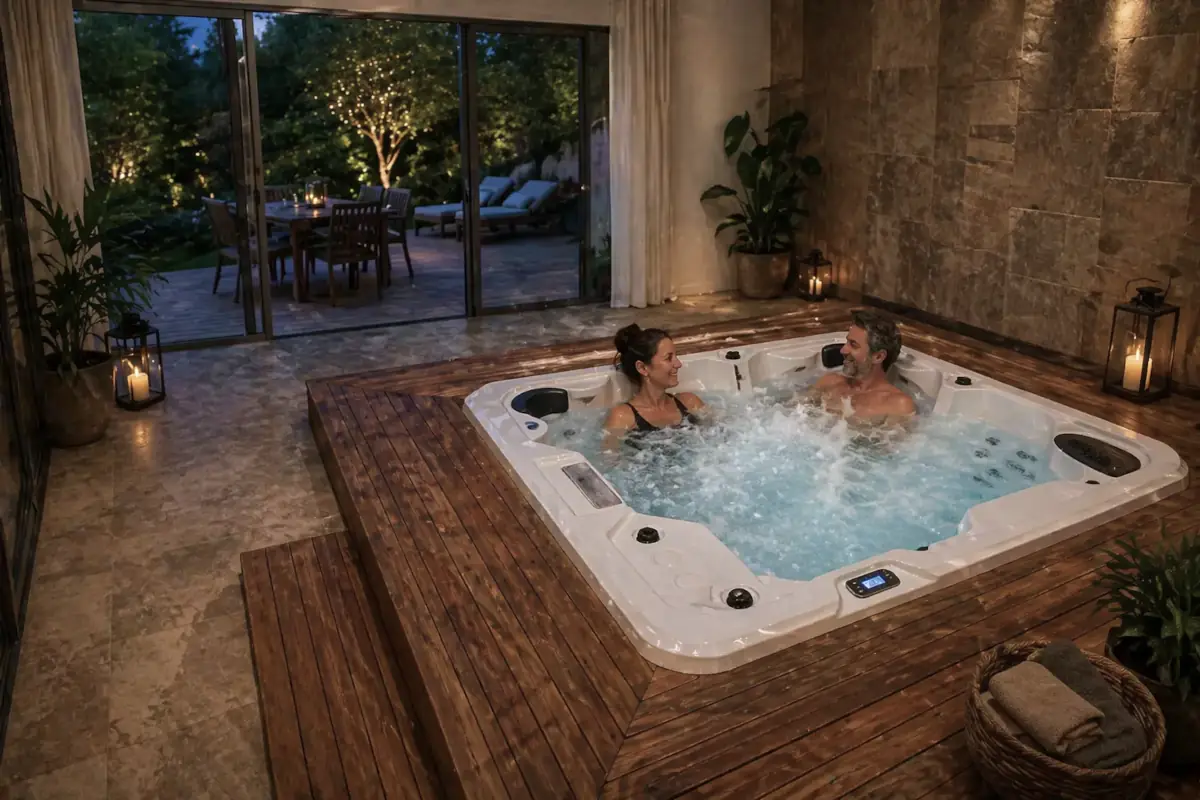
Private-use spa
Spas intended for private use are highly complete hydrotherapy systems. They stand out for being easy to install and for having maintenance that can easily be carried out by the user.
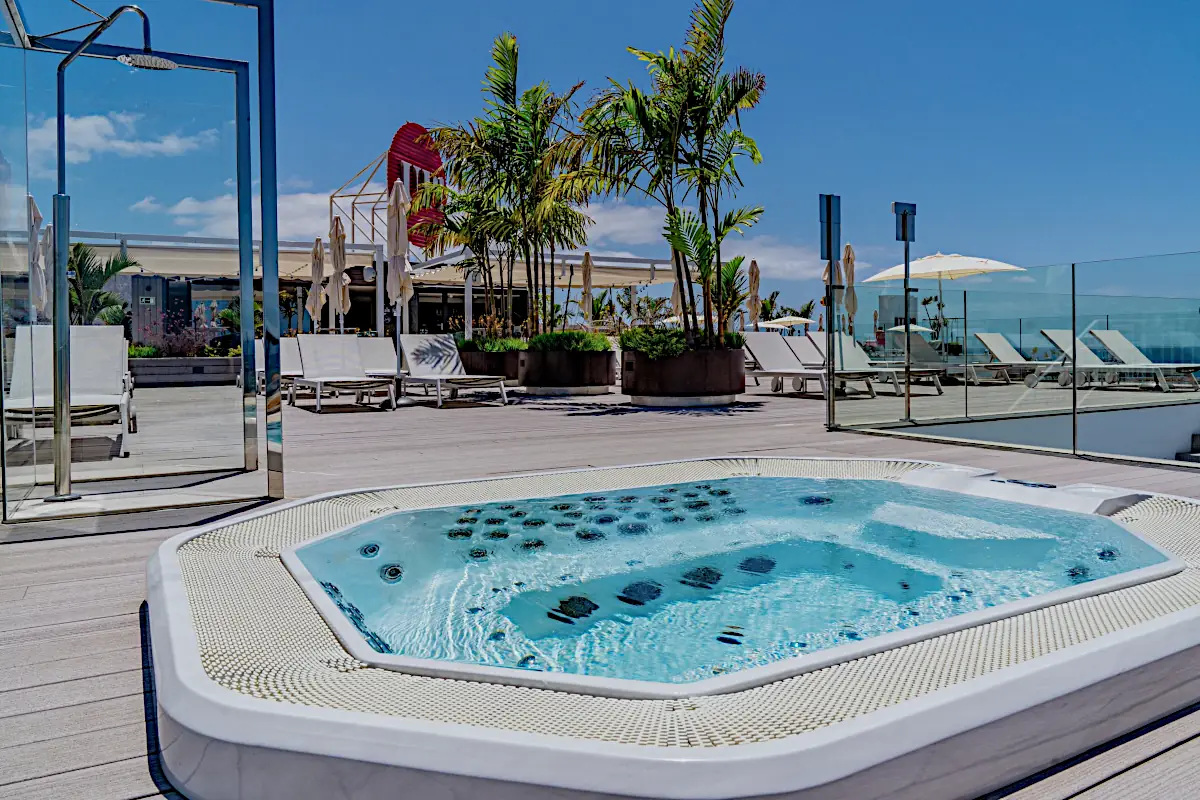
Shared-use spa
A spa intended for commercial use — such as this one installed in a hotel solarium — must comply with specific technical requirements. Among other things, it must feature a perimeter overflow system.
Whirlpool bathtubs
Whirlpool bathtubs are a different solution from spas, although they are often confused. Unlike a spa, they do not operate with continuous recirculation: the water is emptied and renewed with each use. For this reason, they do not require permanent filtration or chemical treatment systems, and their technical approach is much simpler.
Key differences compared to a spa
The main difference is the water management method. While a spa keeps the water hot and treated continuously, the whirlpool bathtub is filled for bathing and emptied afterwards. This implies lower sanitary requirements, but also limits its use to occasional sessions and a small number of people.
Exclusively for indoor use
Whirlpool bathtubs are considered a solution specifically for indoor use. They are not designed to withstand permanent exposure to the elements or for intensive or shared use. Therefore, they are usually installed in bathrooms or conditioned private spaces, where the control of humidity and ventilation is still important.
When does it make sense to choose a whirlpool bathtub?
A whirlpool bathtub may be suitable when looking for occasional use, without continuous water maintenance, and with an installation integrated into the bathroom. If the goal is frequent, shared, or prolonged use over time, the correct solution is a spa, not a whirlpool bathtub.
Choosing the right type of spa
Once you understand the different types of spas and their purpose, the next step is to see how these options translate into real solutions, with different configurations and uses.
➜ Continue reading about spa energy consumption and costs
If you’re looking for examples of residential and professional spas, you can explore the Aqaspas catalogue.
➜ Discover Aqaspas