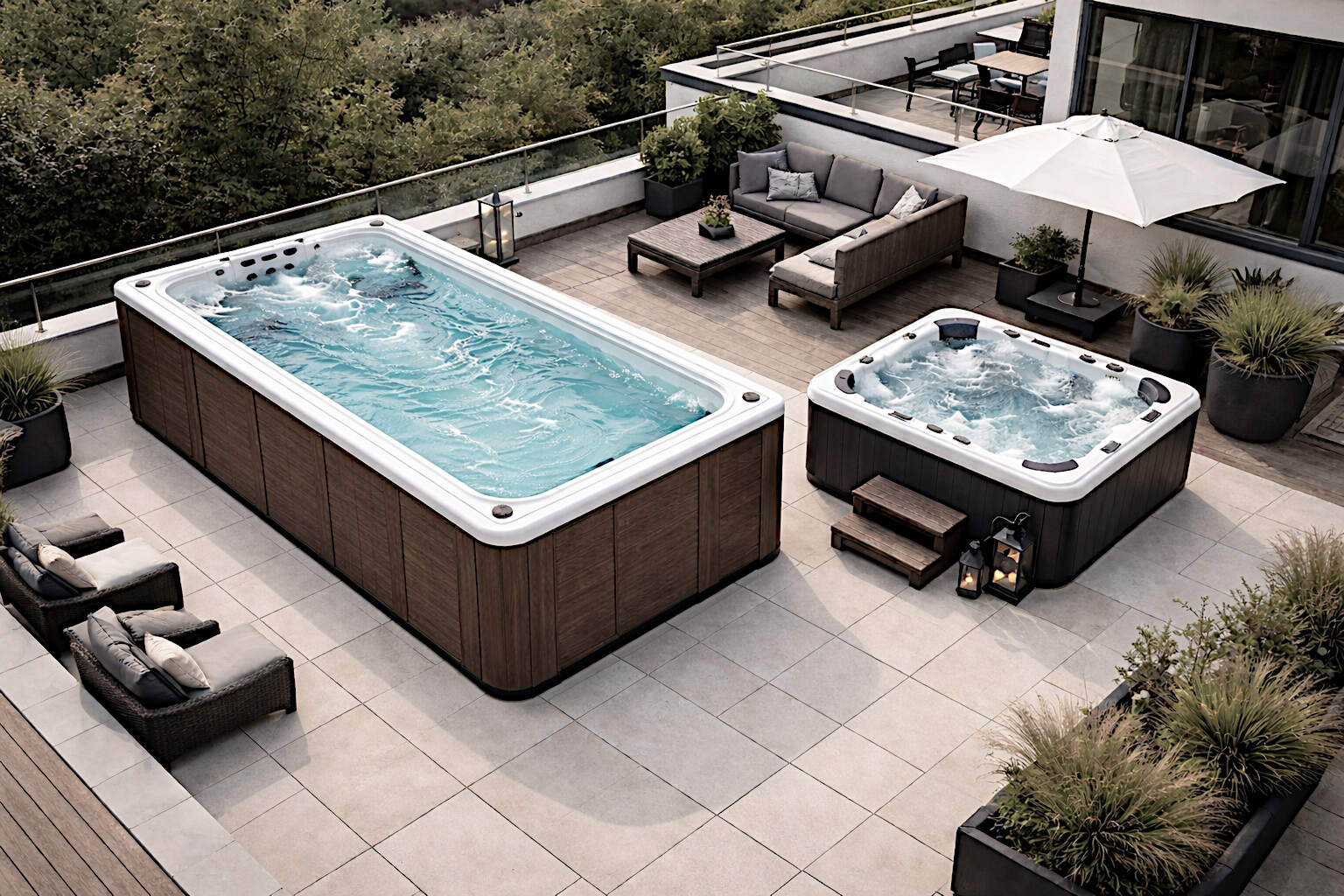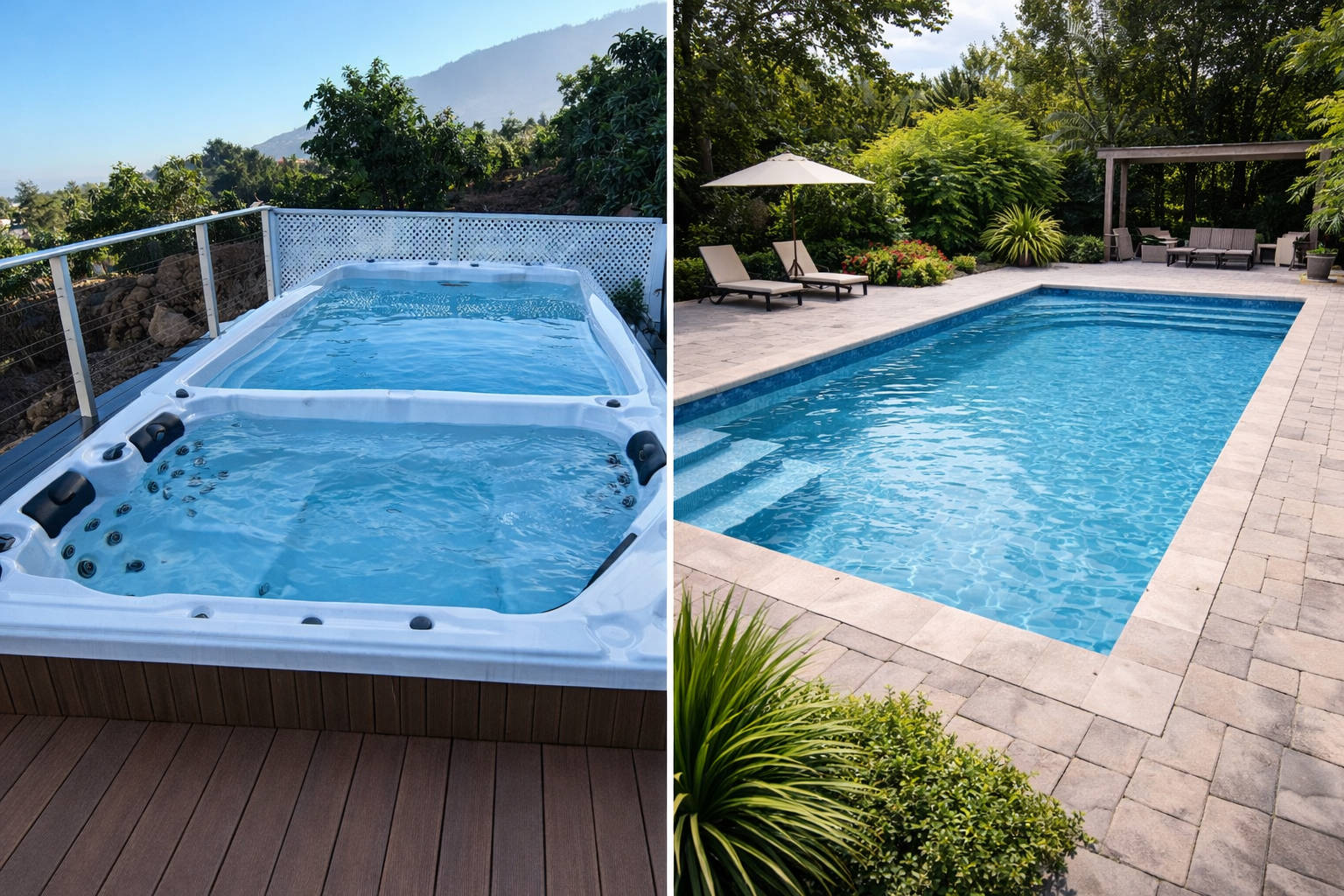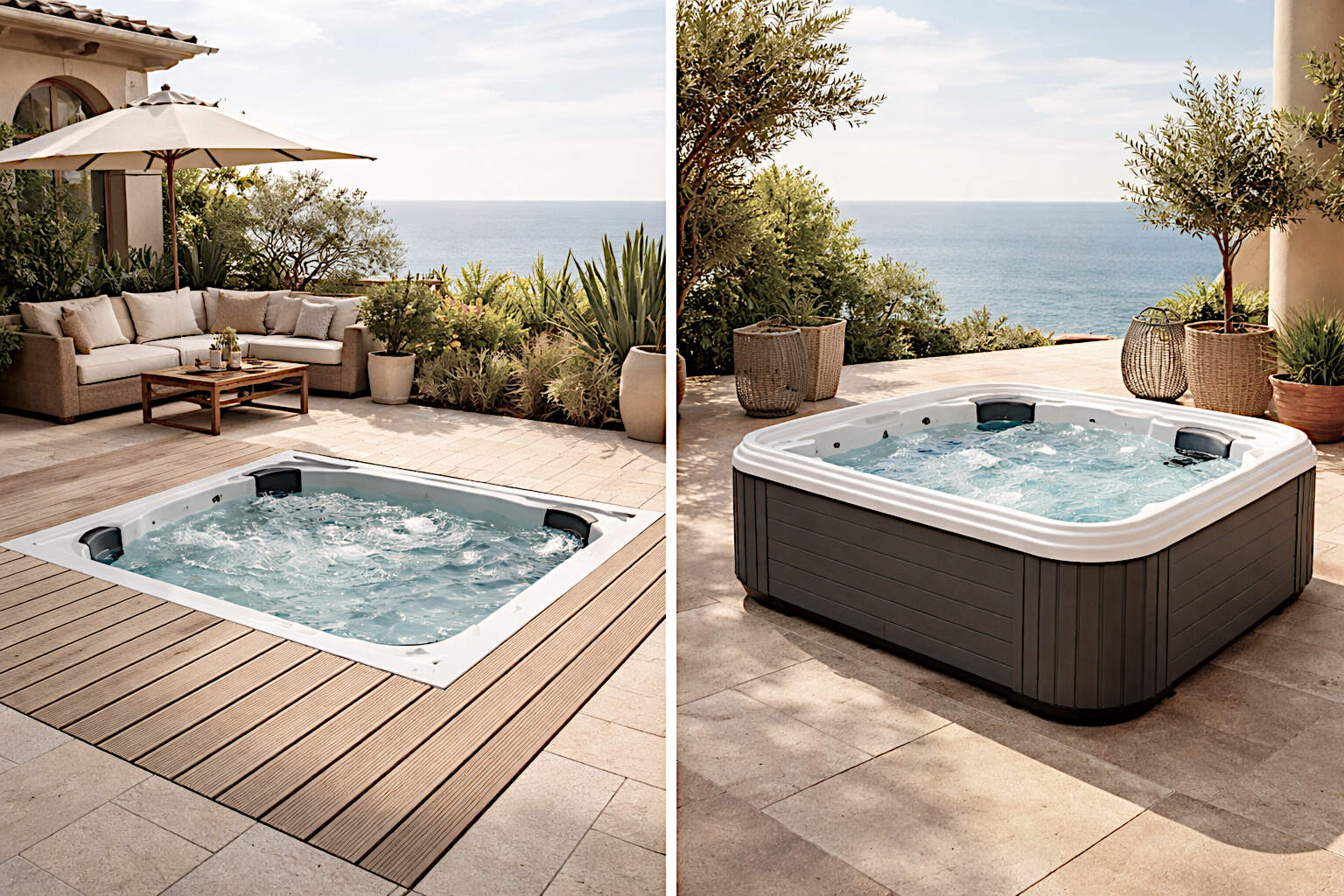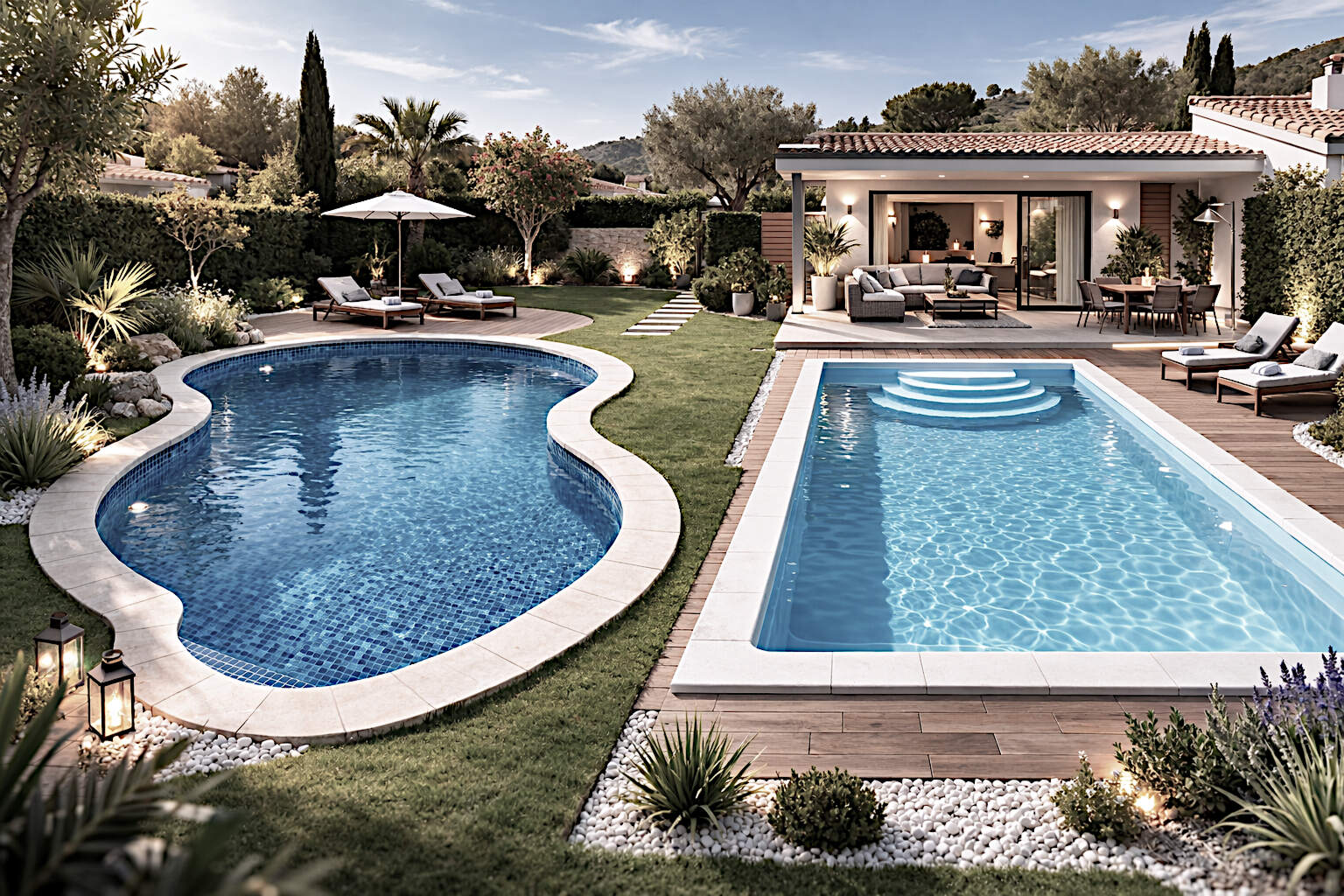
How to interpret these comparisons
These comparisons analyze real options that typically arise when planning a spa, swimspa or pool project. The goal is not to determine which is “better,” but to understand which option fits best depending on the available space, the intended use and the budget.
Each comparison examines aspects such as installation, costs, maintenance, energy consumption and user experience to help make an informed decision.
Quick comparison between solutions
This table summarizes the main differences between spas, swimspas and pools. The detailed comparisons analyze each case in depth, but this overview helps quickly understand which type of solution best fits the available space and intended use.
| Aspect | Spa | Swimspa | Pool |
|---|---|---|---|
| Required space | Very small | Medium | Large |
| Main use | Relaxation and hydrotherapy | Exercise + relaxation | Recreational swimming |
| Installation | Simple | Moderate | Complex (construction work) |
| Year-round use | All year | All year | Mainly summer |
| Maintenance | Moderate | Moderate | Higher |
| Initial cost | Medium | Medium–high | Variable (medium–high) |
To analyze each case in more detail, see the full comparisons such as swimspa vs pool, swimspa vs spa, or concrete pool vs prefabricated pool.
What factors really influence the choice
Available Space
Space determines many decisions. A large garden allows for the installation of a traditional pool, while small terraces or patios are usually better suited to spas or compact swimspas.
Type of usage
Not all solutions are designed for the same purpose. Some prioritize family leisure, others training or therapeutic relaxation. Understanding the main use helps avoid misleading comparisons.
Initial cost and long-term costs
The installation cost is only one part of the project. Maintenance, energy consumption and technical complexity can greatly influence the real cost over the years.
Installation complexity
Some solutions require civil works, excavation and technical planning. Others can be installed with minimal intervention. This difference is often decisive in many projects.
When each type of solution makes sense
Spa
It is usually the most compact option when the main goal is relaxation, hydrotherapy and year-round use with a relatively small water volume.
Swim spa
It combines exercise and relaxation in a single unit. It can be a good fit when you want to swim at home without needing the space required for a traditional pool.
Swimming pool
It is the most suitable solution when the main goal is recreational swimming, family use and a large water surface area.
Compare before deciding
Comparisons help reveal the real differences between systems that often seem similar. Analyzing space, installation, energy use and maintenance helps avoid decisions based only on the initial price.
If you are still exploring options or need to better understand how these solutions work, you can start with the complete guides on spas, swimspas and pools.