
Swimspas –Complete purchasing Guide
Technical guide to understanding how swim spas work, the types available, how they are installed, how much they consume, and what to consider before choosing one.
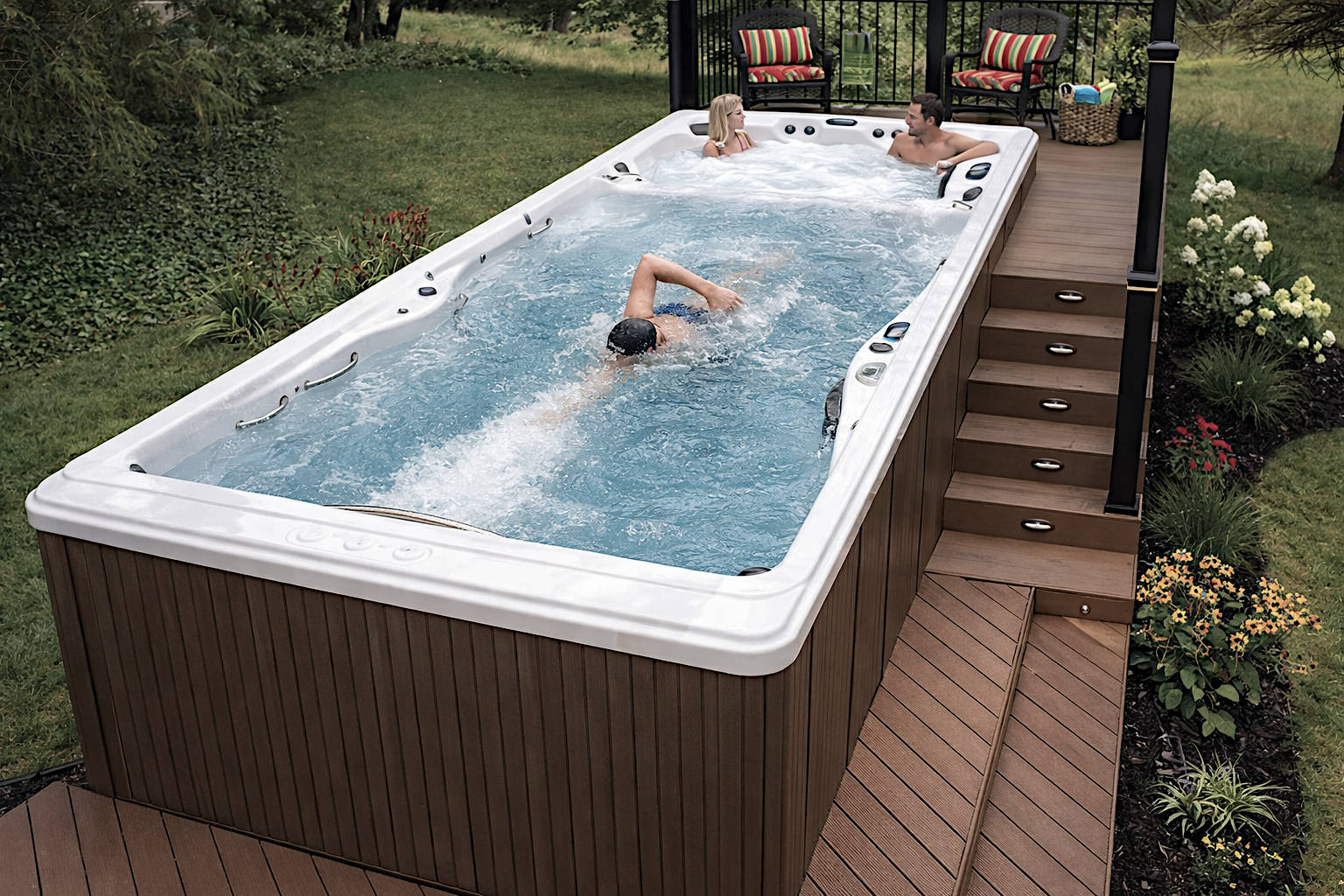
General features of swimspas
- Length: 4 – 7 metres
- Approximate volume: 5,000-6,000 litres
- Filled weight: can exceed 6–17 tonnes
- Required electrical power: 6-12 kW depending on model
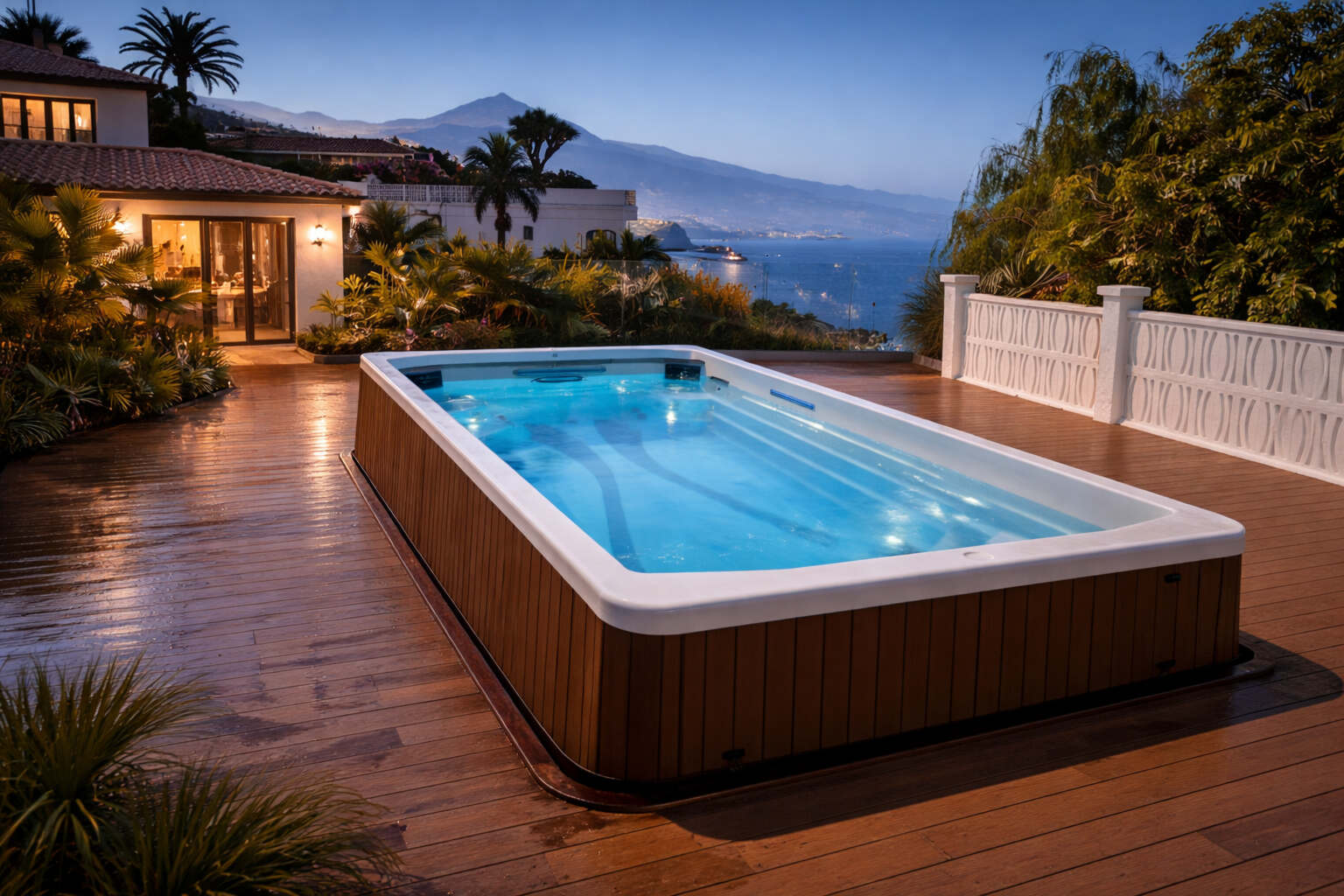
How to choose the right swimspa
Not all swim spas are designed for the same use. The choice depends on the main objective, the available space, and the required technical level.
- One or two temperatures: which is better
- Installation requirements and necessary construction work
- Electric consumption and real costs
Recommended path before deciding
Follow this logical path to assess whether a swim spa fits your project.
1.Understand how it works
- What is a swimspa and how does it work?
- Counter-current swimming system
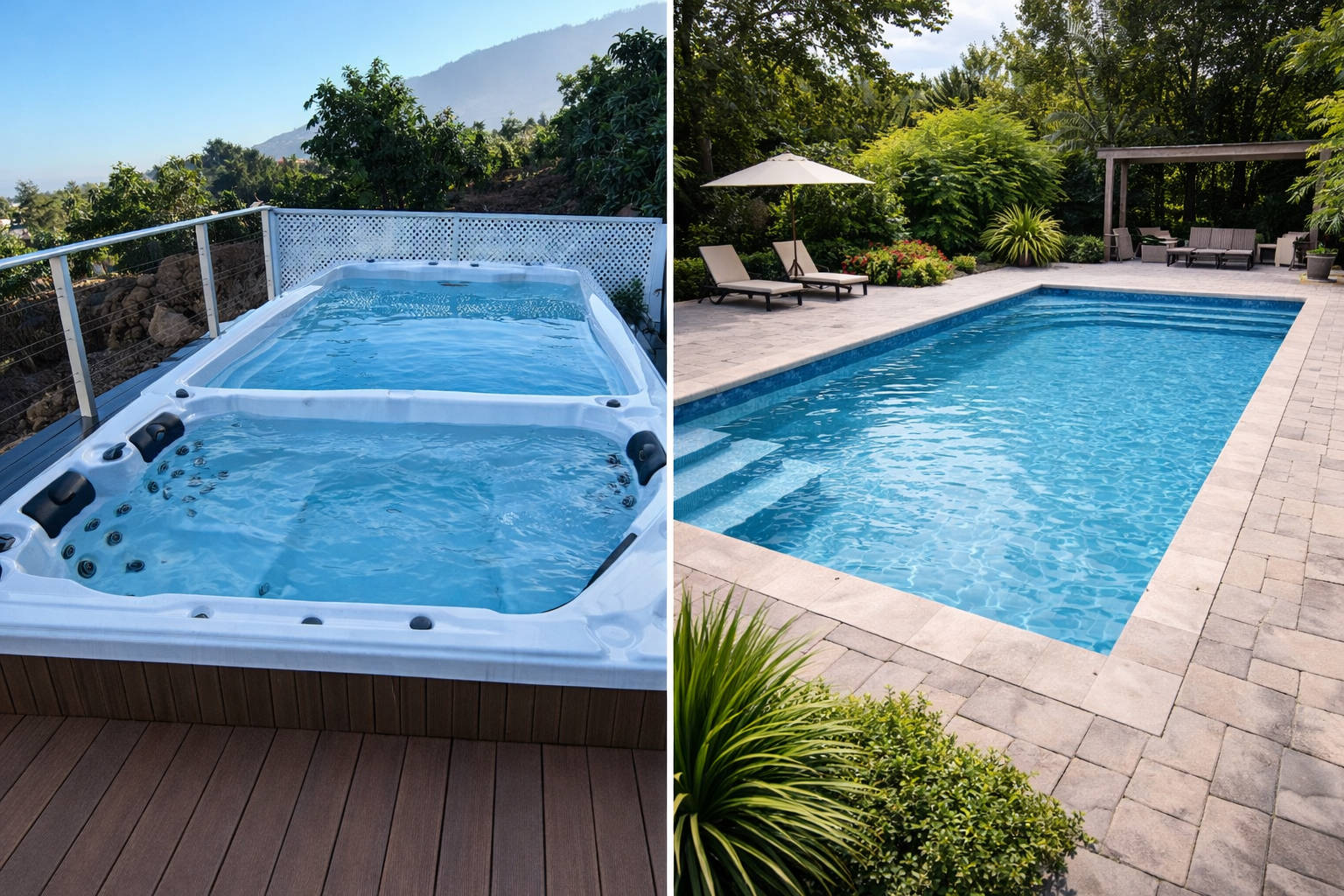
- Differences compared to a pool and a spa
2. Assess technical requirements
- Espacio disponible y accesos
- Structural load capacity
- Required electrical connection
3. Analyze costs and maintenance
- Consumo eléctrico anual estimado
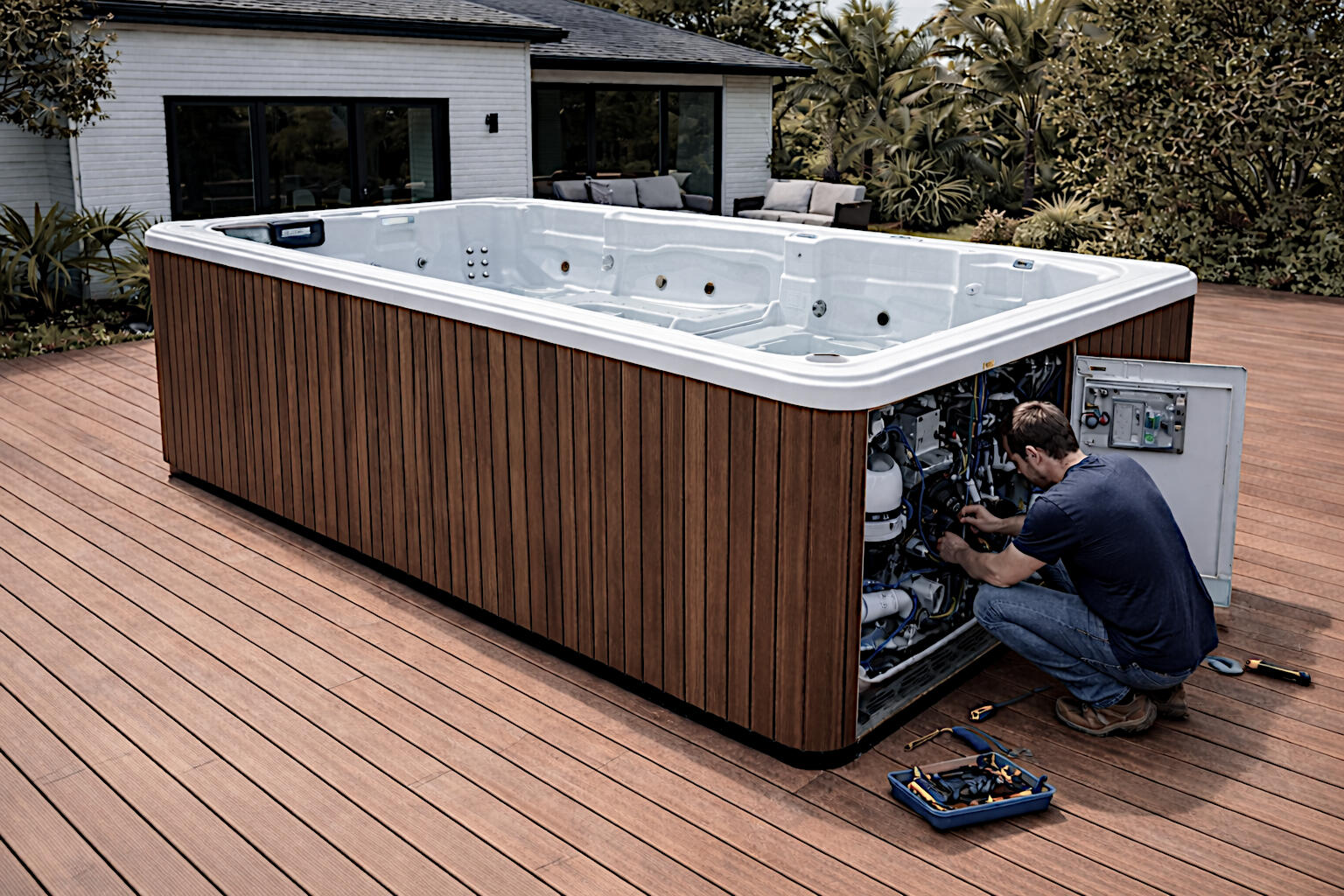
- Water maintenance
- Costes a medio y largo plazo
What really sets a swim spa apart
Although it sits between a spa and a pool, a swim spa follows a different logic in terms of use, structure, and energy consumption.
Structural differences
- Water volume intermediate between a spa and a pool.
- Integrated adjustable counter-current system.
- High level of thermal insulation.
Differences in usage
- Continuous swimming in a compact space.
- Year-round use with controlled temperature.
- Possibility to combine exercise and relaxation.
Investment differences
- Higher investment than a traditional spa
- Less complex than a concrete pool.
- Constant but predictable energy costs.
Before deciding
A swim spa is a technical solution designed for a specific use. Properly assessing the context helps avoid common mistakes.
- Space: available surface area and access for installation.
- Actual use: regular training, rehabilitation, or family use.
- Electric consumption: heating and pumps.
- Long-term expectations: maintenance and durability.
Compare before choosing
Real models and projects
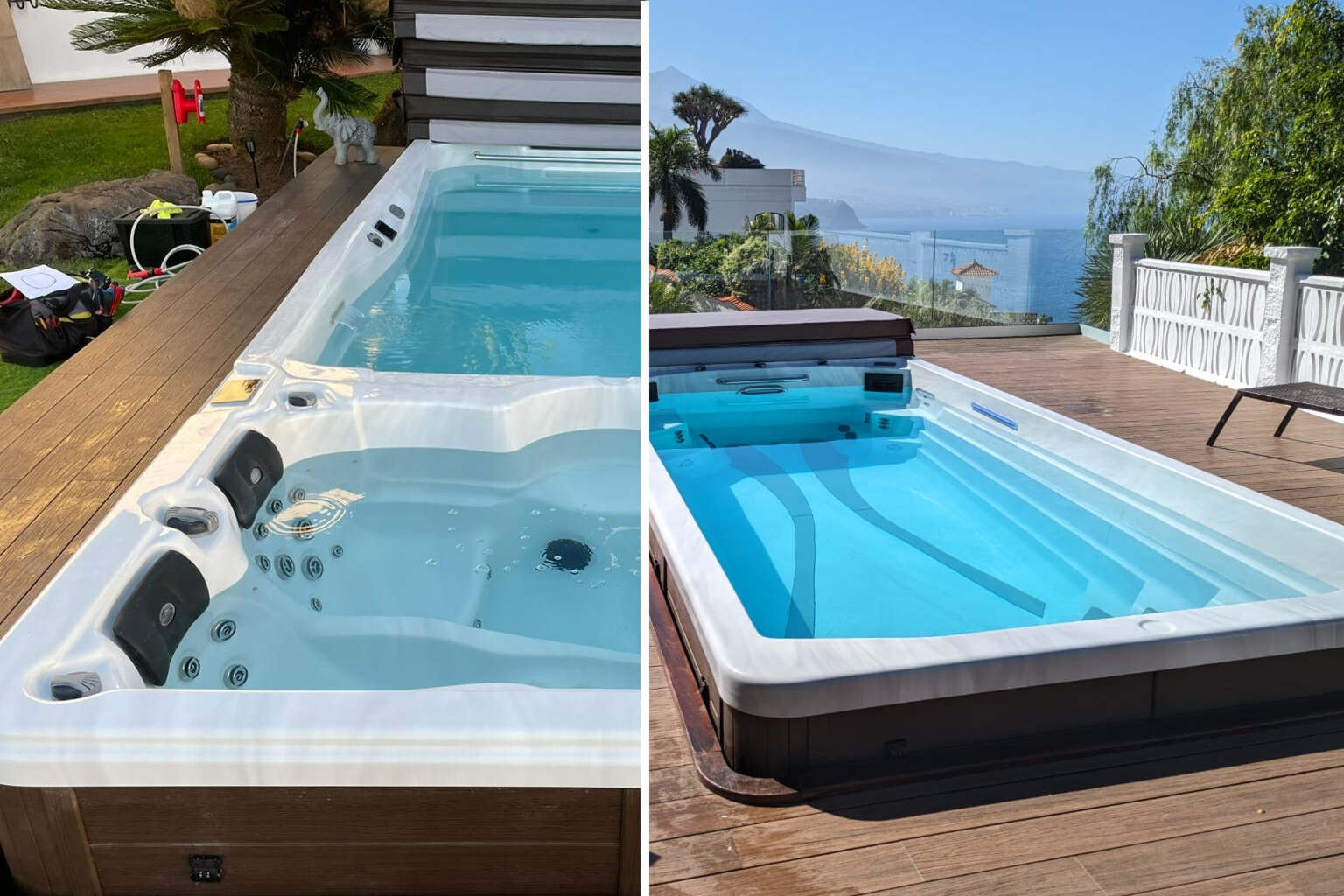
Analyzing professionally executed examples helps understand differences in insulation, current power, and technical configuration.
To see swim spa models and real projects, you can explore Aqaspas.